












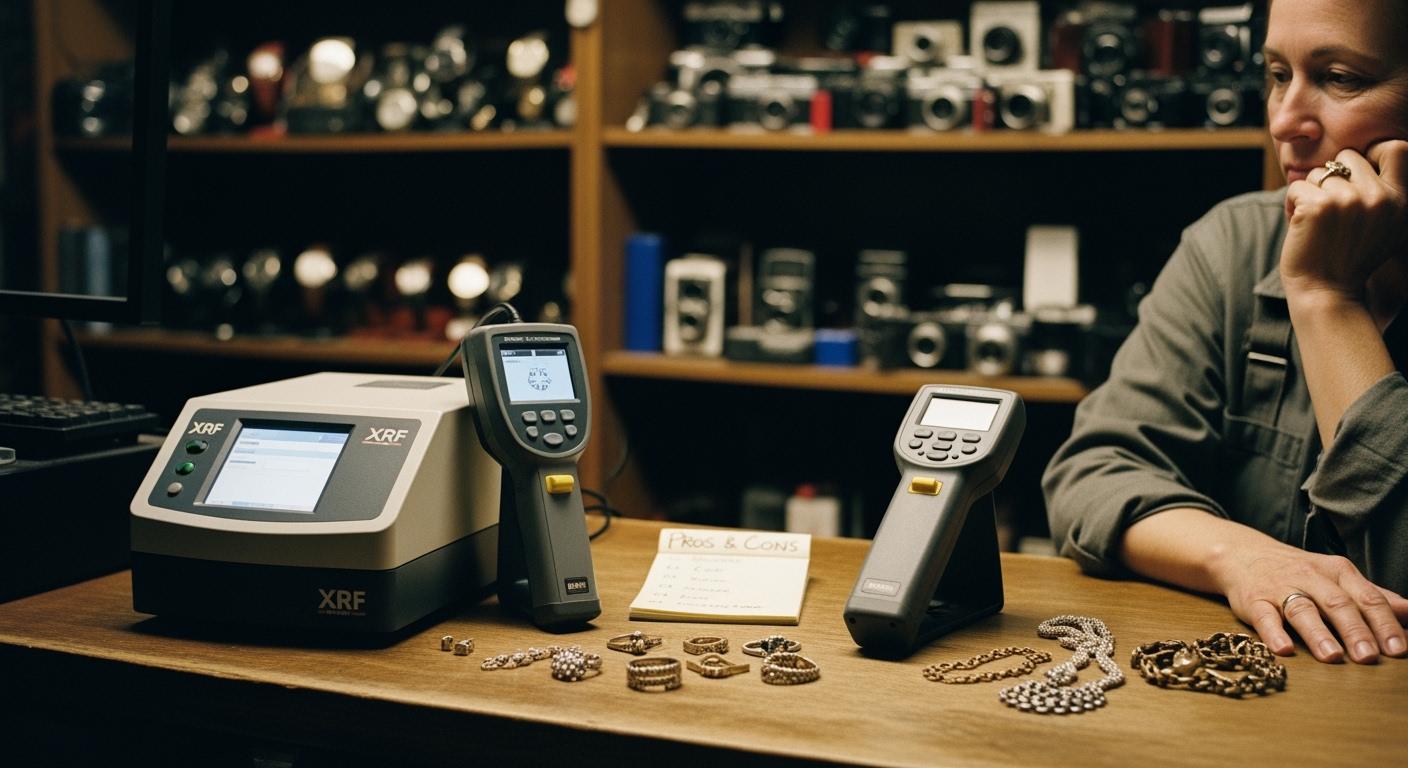
In the collateral lending industry, precision is the primary defense against financial loss. As the value of gold, silver, and platinum fluctuates, the ability to rapidly and accurately verify purity determines a pawn shop’s competitive edge. For years, appraisers had to choose between slow, subjective acid tests or expensive, destructive fire assays. Today, X-ray Fluorescence (XRF) technology has become the industry standard. However, a significant question remains for shop owners: Should you invest in a benchtop (desktop) system or a portable handheld analyzer?
Both form factors utilize the same fundamental physics—measuring characteristic X-rays emitted from a sample to determine elemental composition. Yet, their operational impacts on workflow, customer trust, and long-term ROI vary drastically. This guide provides a metallurgical and business-centric comparison to help you select the ideal precious metal analysis solution for your specific volume and environment.
Key Takeaways
-
Analytical Stability: Benchtop XRF models offer superior repeatability for high-volume intake, often featuring dual screens for client transparency.
-
On-Site Agility: Handheld analyzers enable “field appraisals,” allowing buyers to verify assets at estate sales or during remote acquisitions.
-
Non-Destructive Integrity: Both models utilize non-destructive testing (NDT), preserving the item’s aesthetic and weight.
-
Fraud Detection: Advanced Silicon Drift Detectors (SDD) in modern XRF units can identify complex forgeries like tungsten cores and cadmium contamination.
-
Workflow Integration: Your choice should be dictated by whether you prioritize a laboratory-style counter setup or a mobile “buy-anywhere” strategy.
Technical Fundamentals of XRF Spectrometry
XRF technology works by emitting high-energy primary X-rays that displace electrons from the inner shells of atoms in the sample. As electrons from outer shells drop into these vacancies, they release energy in the form of “fluorescence.” Because every element has a unique atomic signature, the spectrometer can provide a precise percentage-based breakdown of Gold (Au), Silver (Ag), Copper (Cu), and even trace contaminants.
The core difference between desktop and handheld units often lies in the “Geometry of Analysis.” Benchtop units feature a fixed chamber that eliminates external light and optimizes the distance between the X-ray tube, the sample, and the detector. This stability often translates to an accuracy precision of +/- 0.01%, essential for high-karat valuations.
Benchtop XRF: The Anchor of Professional Appraisal
Laboratory Precision in a Retail Setting
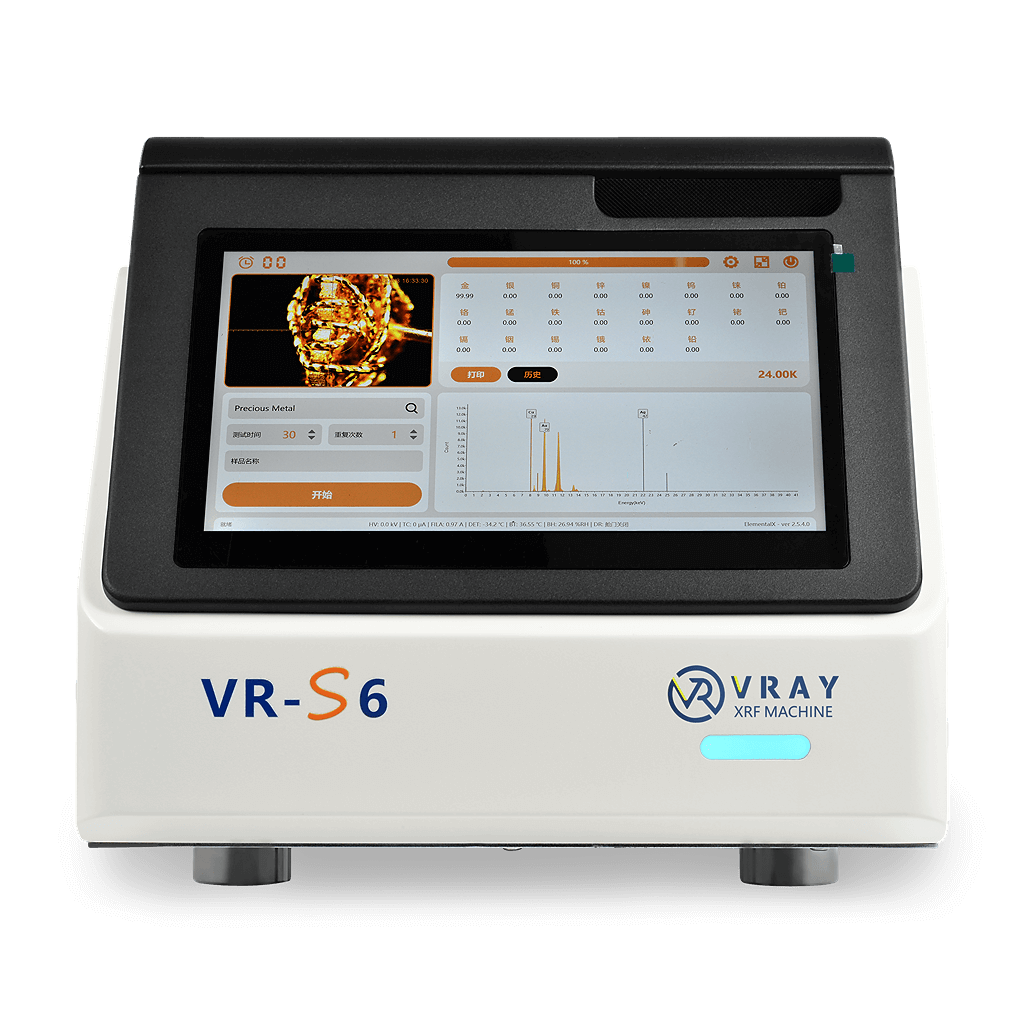
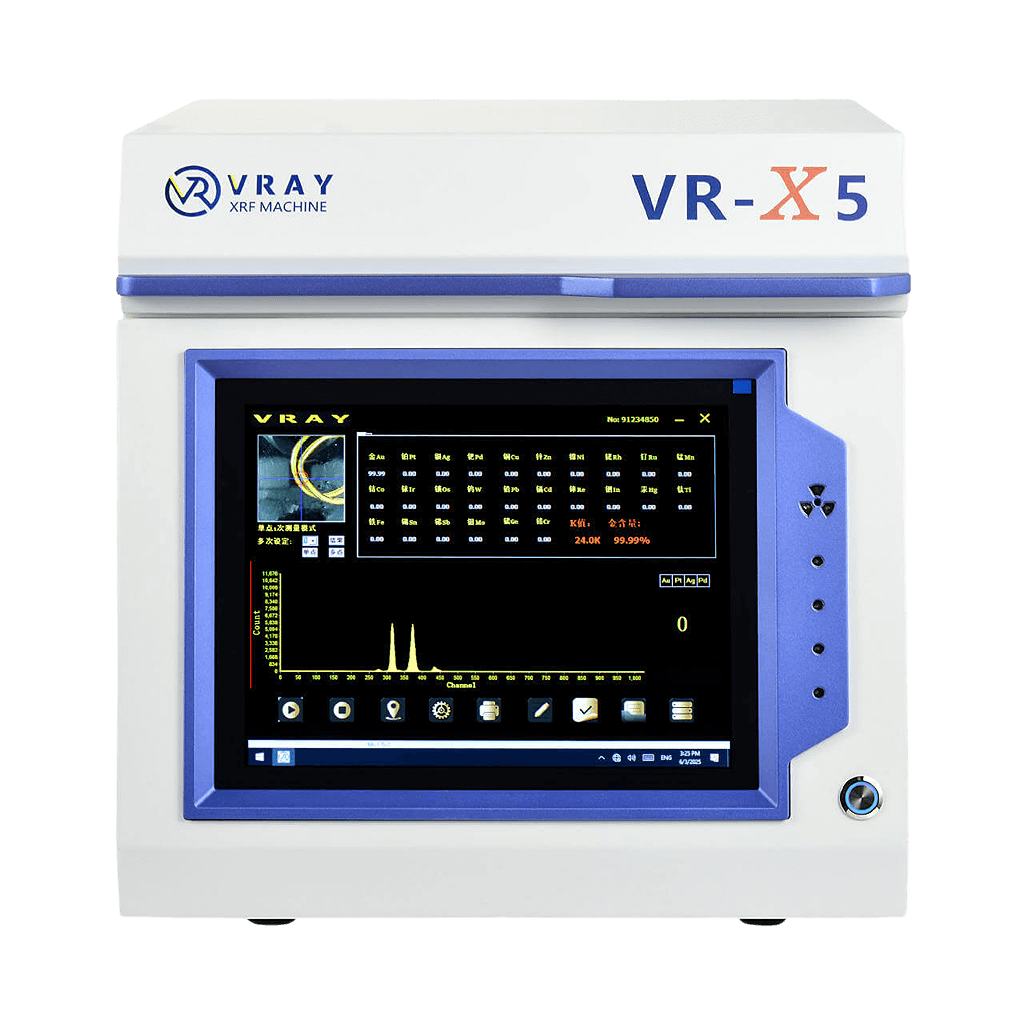
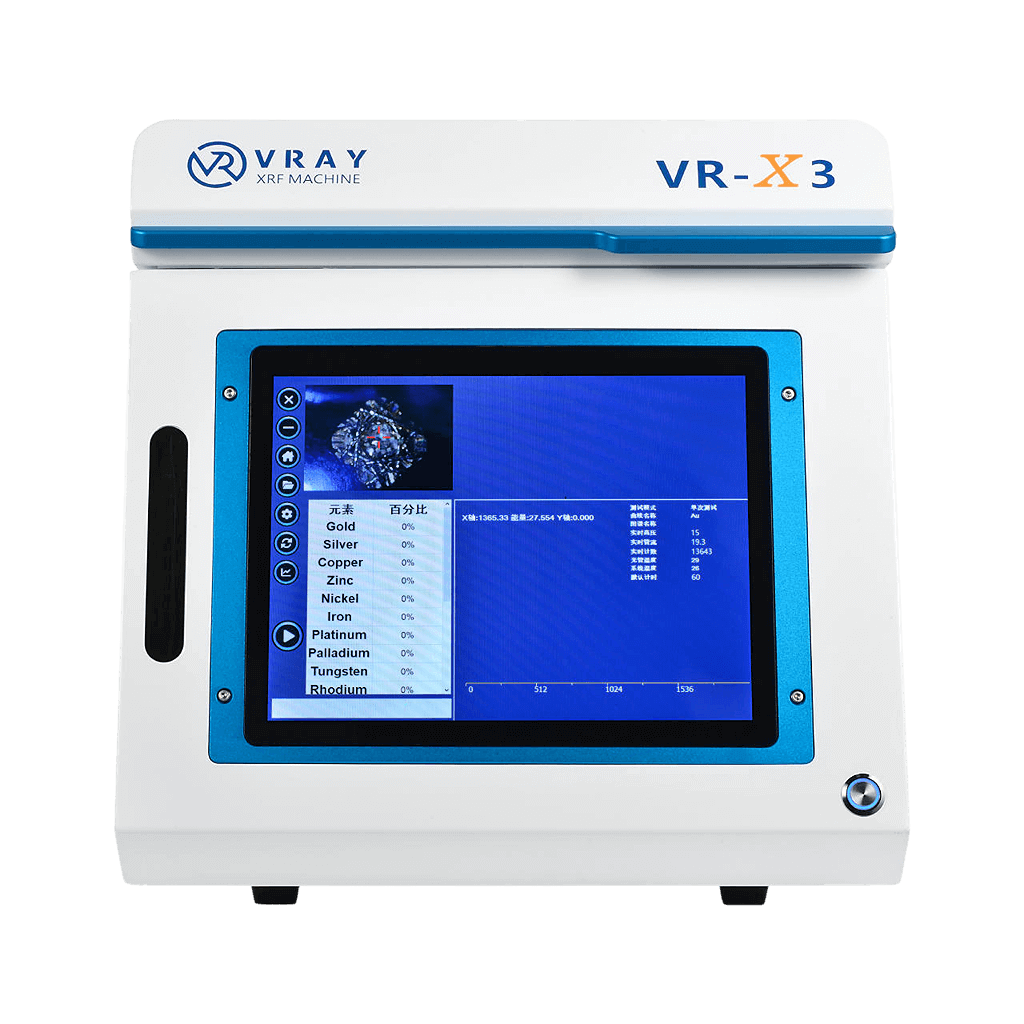
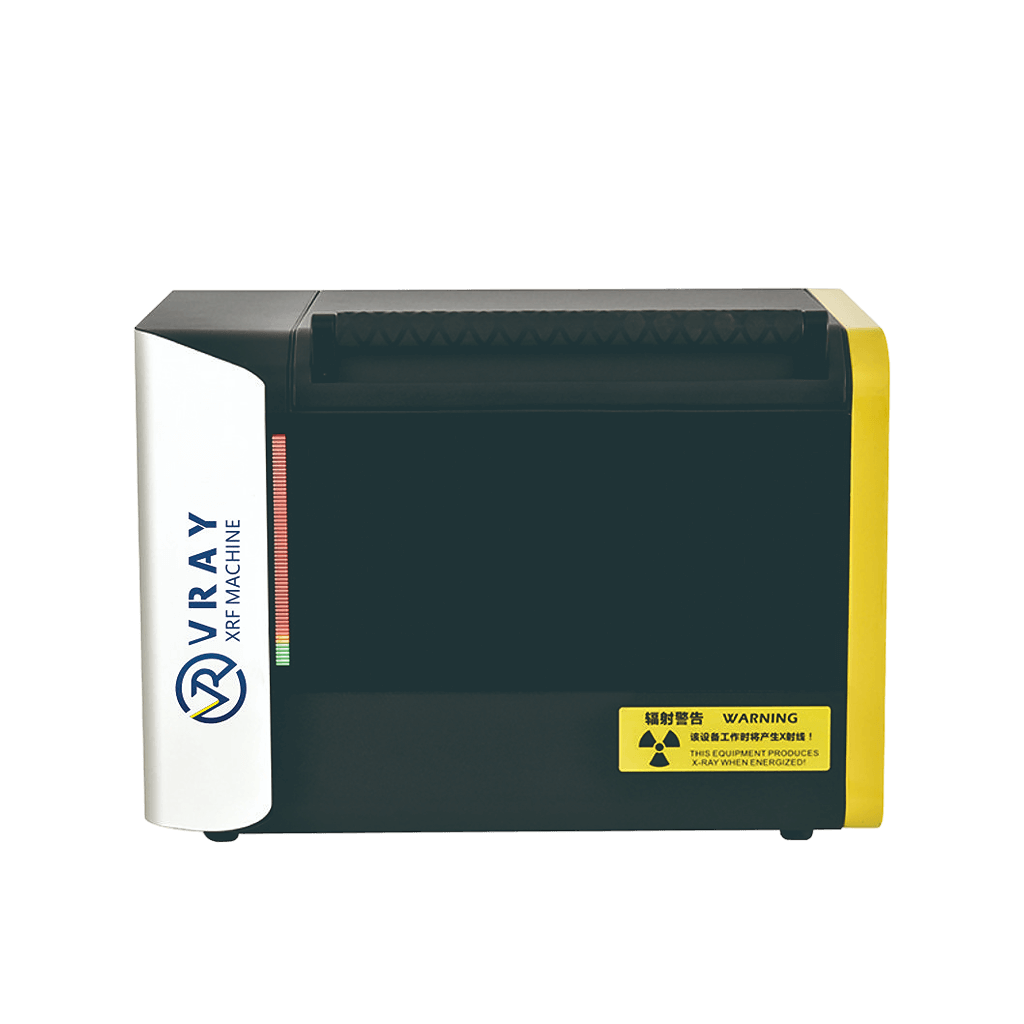
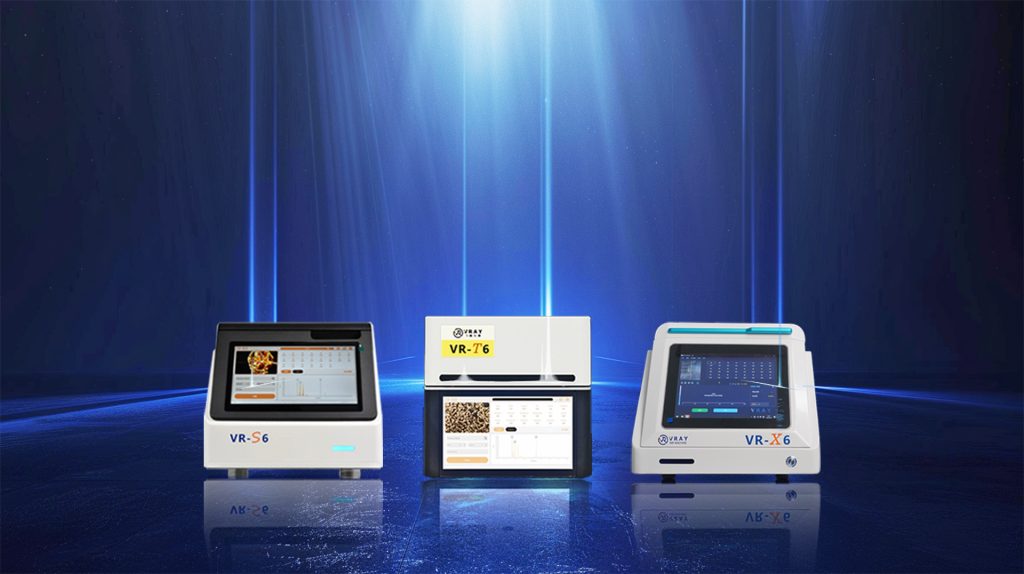
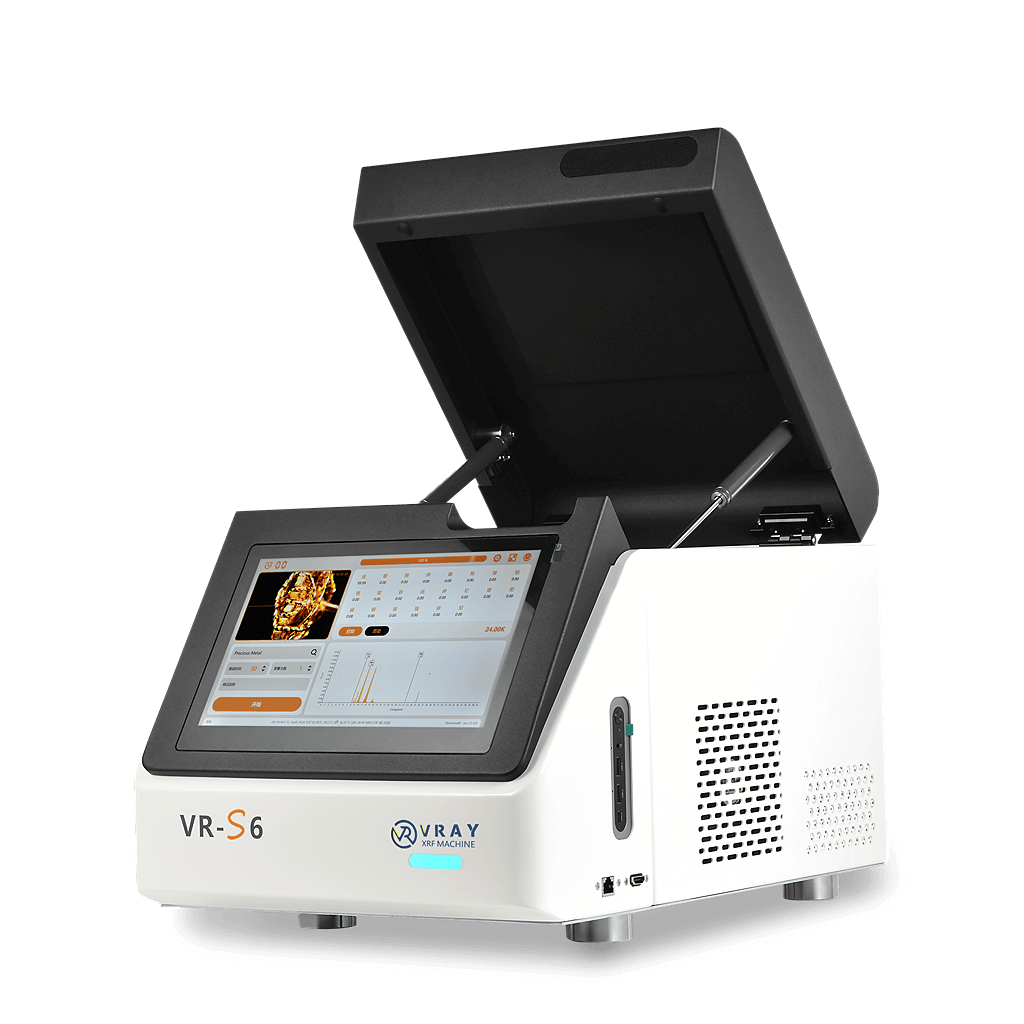
Benchtop XRF analyzers, such as the VRAY VR-X5, are engineered for high-throughput environments. These systems are designed for the “Front Counter” experience. Their most significant advantage is stability. Because the sample is placed inside a shielded chamber, the analyzer can utilize higher-power X-ray tubes without risking radiation scatter to the operator. This allows for deeper penetration and more accurate detection of heavy-metal cores (like Iridium or Rhenium) hidden deep within gold bullion.
Building Customer Trust through Transparency
In a pawn shop, perception is reality. A benchtop unit with a secondary, customer-facing screen provides immediate visual proof of the metal’s purity. When a client sees the digital display confirm their “18K” item is actually 14K, the dispute is resolved by science, not by the appraiser’s opinion. This transparency is a powerful tool for customer retention and brand prestige.
|
Benchtop Factor |
Impact on Operations |
Ideal Item Types |
|---|---|---|
|
Fixed Chamber |
Total radiation shielding & stable geometry. |
Luxury watches, intricate rings. |
|
Dual Display |
Real-time client trust & transparency. |
Engagement rings, family heirlooms. |
|
High-Power Tube |
Deeper penetration for bullion bars. |
Gold bars, large silver coins. |
Handheld XRF: The Mobile Hunter’s Tool
Portability and “The Buy”
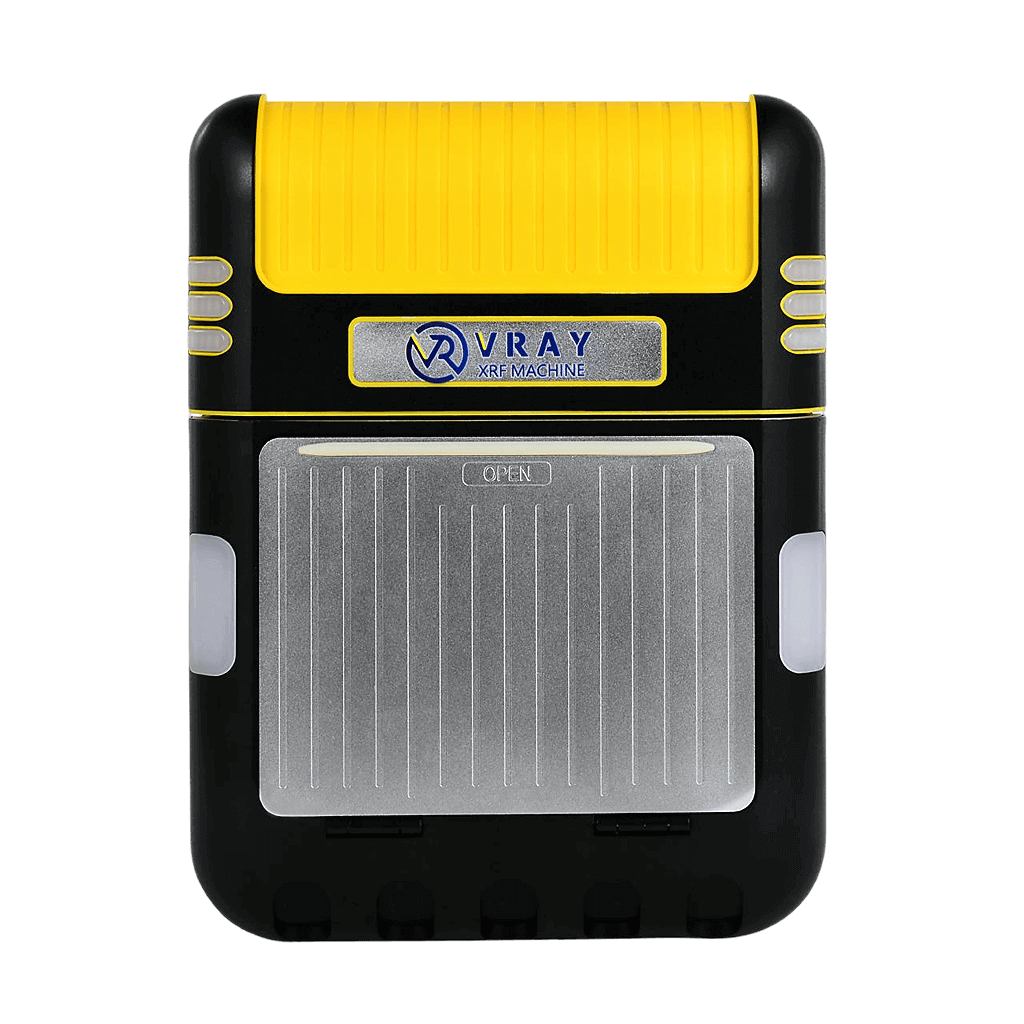
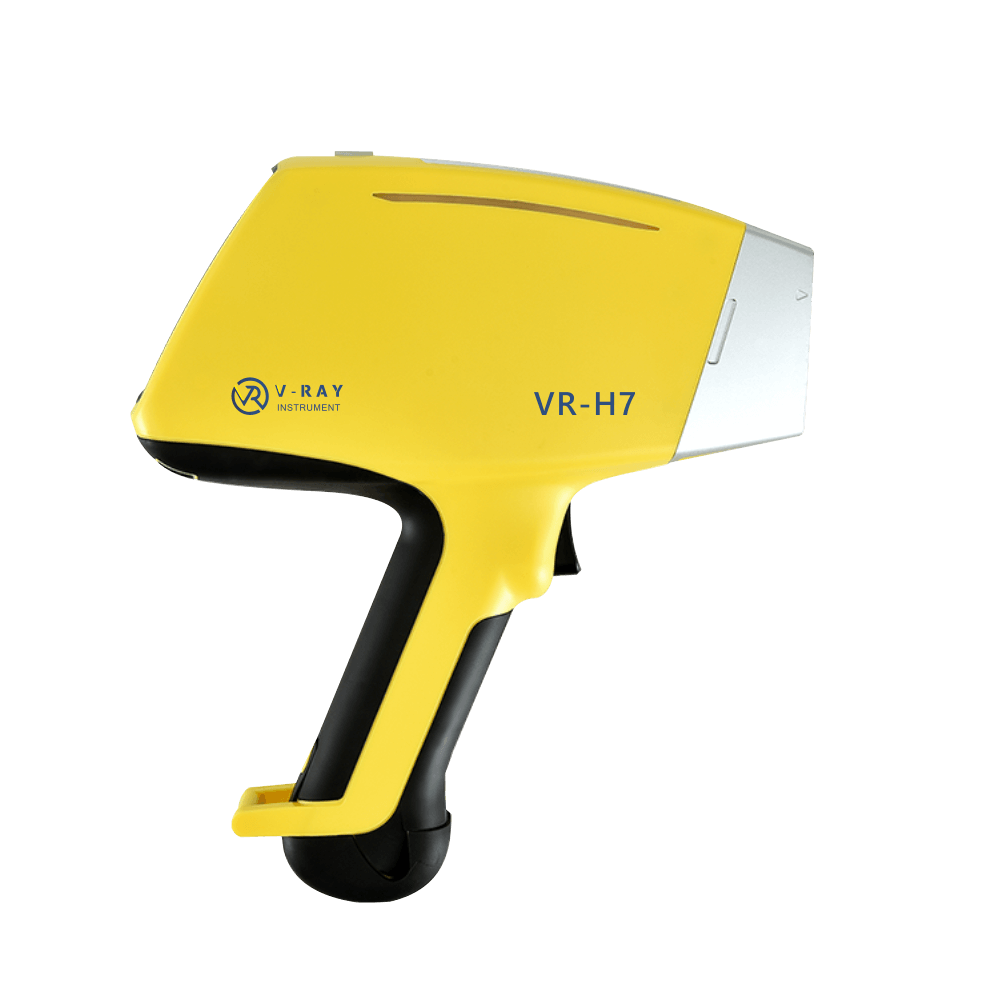
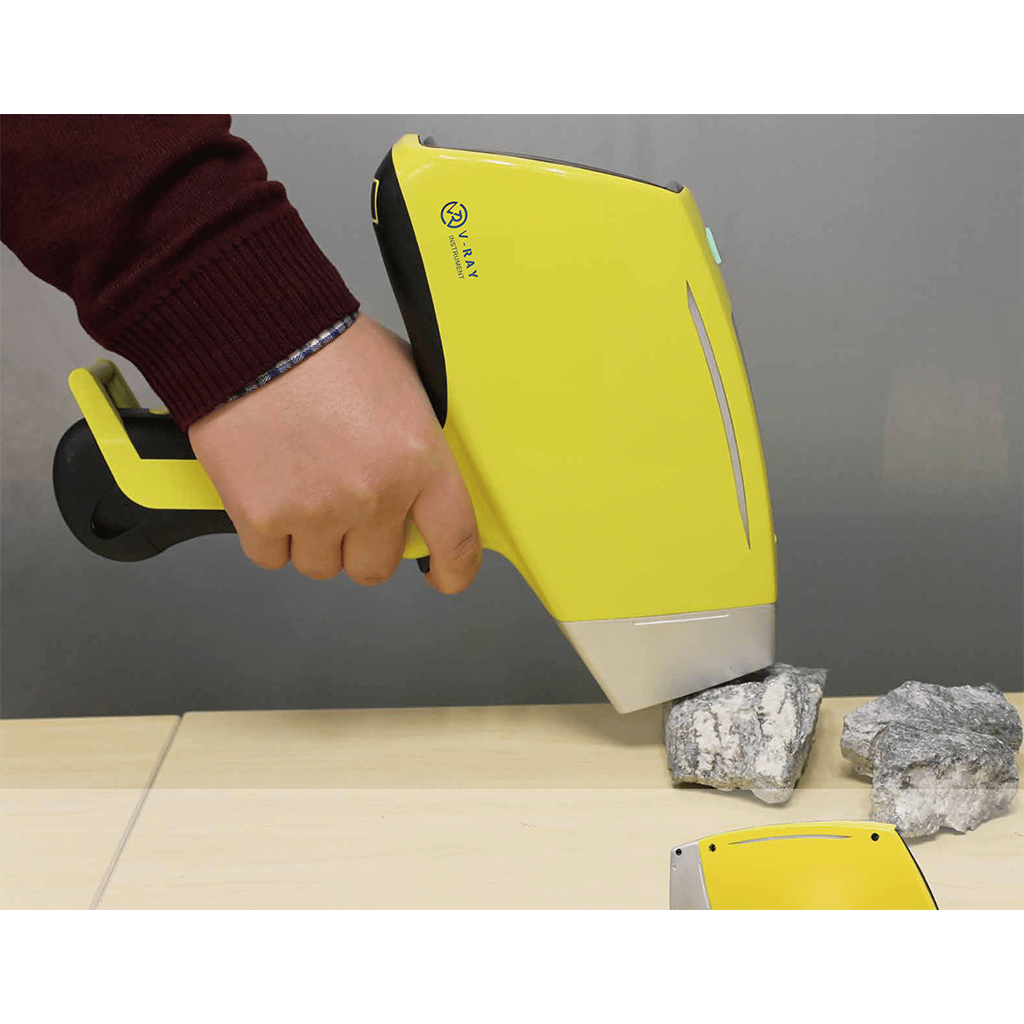
The primary advantage of a handheld precious metal analyzer is its agility. For pawn brokers who participate in estate liquidations, buying events, or high-security bank-vault inspections, a portable unit is indispensable. Battery-powered and lightweight (typically under 1.5kg), these devices transform any flat surface into a high-tech lab. They allow you to “capture the deal” before the seller has a chance to visit a competitor.
Ease of Use and Rapid Sorting
Handhelds are optimized for speed. They utilize “Point-and-Shoot” interfaces that require minimal training for staff. In a scenario where a shop receives a massive bag of mixed-scrap silver and gold jewelry, a handheld unit allows an employee to sort the items by karatage in minutes, significantly improving the efficiency of the intake process.
“Speed is the currency of the mobile buyer. If you can verify the purity of a collection in the client’s living room, you eliminate the friction that leads to lost opportunities.”
Head-to-Head Comparison: Benchtop vs. Handheld
Choosing the right form factor requires a deep dive into your shop’s daily metrics. The following matrix compares the critical performance variables for both portable and stationary XRF systems.
|
Feature |
Benchtop (Desktop) XRF |
Handheld (Portable) XRF |
|---|---|---|
|
Primary Advantage |
Stability & Customer Confidence |
Mobility & Buying Agility |
|
Precision (99.9% Gold) |
Exceptional (+/- 0.01%) |
Reliable (+/- 0.1%) |
|
Safety Profile |
Passive (Shielded Chamber) |
Active (Requires Safe Handling) |
|
Sample Size Limit |
Limited by Chamber Volume |
Unlimited (External Analysis) |
|
Staff Training |
1-2 Hours (Analytical software) |
15-30 Mins (Point-and-shoot) |
The ROI of Accurate Analysis
Investment in XRF technology should be viewed through the lens of “Avoided Loss.” A single mistake in misidentifying a tungsten-filled 1-ounce bar can cost a shop $2,000+. Traditional acid tests frequently fail to detect these “smart fakes.”
Furthermore, XRF performance extends beyond just gold. Modern VRAY systems can identify Platinum, Palladium, and Rhodium, as well as hazardous elements like Cadmium or Lead. Identifying a high-value palladium alloy that was mistakenly sorted as “scrap silver” can pay for the device in a single week of high-volume trading.
Making the Final Decision: A Checklist for Owners
Before finalizing your procurement, ask your management team these four critical questions:
-
Where is the intake happening? If 95% of your buys happen at the front counter, a benchtop system like the GoldPro VR-X5 is superior for trust-building.
-
What is the throughput? High-volume shops (50+ tests per day) benefit from the ergonomics of a fixed benchtop system.
-
Do you appraise estate jewelry? If you leave the shop to perform valuations, a handheld unit is a mandatory requirement.
-
Who is operating the device? Handheld units have a lower learning curve, while benchtop software often provides deeper “spectral data” for advanced metallurgical research.
Professional Tip: Many successful regional pawn chains utilize a “Hybrid Strategy”—keeping a high-precision benchtop unit at their main branch for final verification and equipping mobile buyers with handheld units for field intake.
Frequently Asked Questions
Can XRF detect gold plating better on a desktop or handheld?
Both can detect plating by analyzing the “peak ratios” of the spectra. However, desktop models often have higher-powered tubes that can sometimes see through slightly thicker coatings than portable units.
Is a desktop XRF safer for my employees?
Benchtop units are inherently safer because the X-ray beam is contained within a shielded, interlocked chamber. Handheld units are safe when used with a test stand or proper trigger discipline, but they require more active safety awareness.
How often do I need to calibrate my pawn shop XRF?
Modern VRAY analyzers are designed for industrial stability. A simple “standardization” check with a provided sample takes 30 seconds and should be performed once daily to ensure precision and profit.
Does a handheld XRF cost less than a desktop?
Not necessarily. While handhelds appear smaller, they utilize high-end miniaturized components (X-ray tubes and batteries) that often put their price point in the same range as professional benchtop models, typically $10,000 to $25,000.
Which model is better for testing silver coins?
Benchtop models are generally preferred for coins because the sample can be placed perfectly flat and centered over the analysis window, ensuring the highest repeatability for numismatic grading.
For more information on selecting the perfect spectrometer for your pawn or jewelry business, visit the VRAY Instrument Resource Center.