















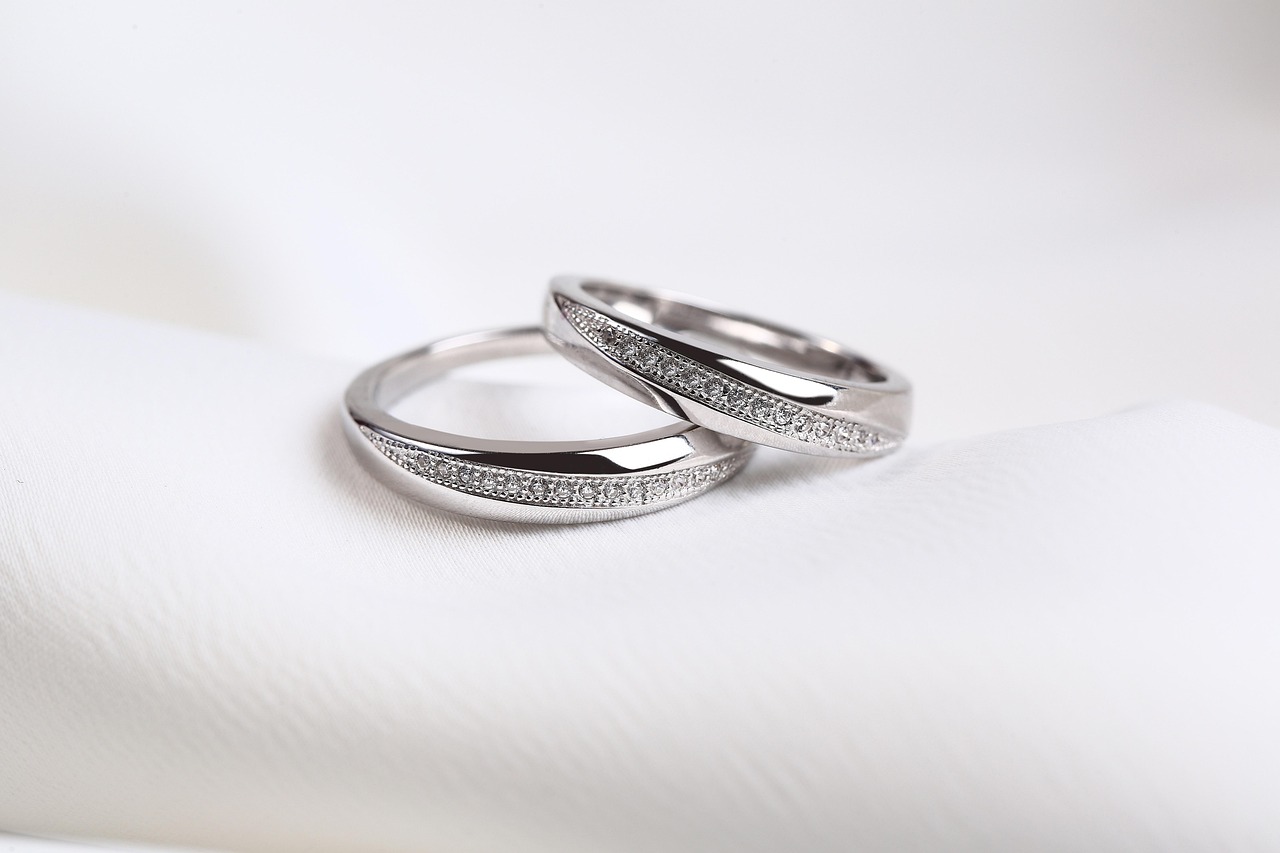
In the high-end jewelry market, the visual distinction between white gold and platinum is virtually non-existent. Both metals project a luxurious, brilliant white sheen that consumers demand for engagement rings and luxury watches. However, from a metallurgical and valuation perspective, these two materials are worlds apart. One is a complex alloy of yellow gold bleached by other metals, while the other is a dense, pure element with exceptional physical stability.
For pawnbrokers, refiners, and professional jewelers, the “identity gap” between these metals presents a significant risk. Misidentifying white gold as platinum (or vice versa) can lead to incorrect pricing, insurance errors, and compromised business reputations. Modern analysis relies on precision XRF technology to penetrate surface treatments and reveal the true elemental core of each piece.
Key Takeaways
The Plating Barrier: Almost all white gold is rhodium-plated to hide its natural yellowish-gray tint, making it visually identical to platinum.
Density Disparity: Platinum is approximately 20% denser than 18K white gold; weight-based identification is useful but fails for complex, multi-stone settings.
Metallurgical Composition: White gold is a heterogeneous alloy containing gold, nickel, silver, or palladium, whereas platinum jewelry is typically 90-95% pure element.
Analytical Precision: X-ray Fluorescence (XRF) is the industry standard for non-destructive verification, capable of measuring individual alloy percentages.
Maintenance Profiles: Platinum maintains its color through a unique “patina” process, whereas white gold requires periodic re-plating to sustain its white luster.
The Metallurgy of the “White” Aesthetic
White Gold: The Art of Bleaching
Gold is naturally a warm yellow. To create “white gold,” manufacturers must perform a metallurgical bleaching process. This involves alloying 24K yellow gold with white-colored metals. Historically, nickel was the primary choice due to its low cost and high bleaching power. However, due to nickel-release regulations and skin sensitivities, premium white gold now often utilizes palladium.
Even with high-quality alloys, white gold retains a faint yellowish or grayish undertone. To achieve the bright “white” look expected by consumers, a thin layer of Rhodium (part of the platinum group metals) is electroplated onto the surface. This layer is usually only 0.5 to 1.0 microns thick, but it acts as a perfect visual disguise, mimicking the high reflectivity of platinum.
Platinum: Elemental Purity
Platinum (Atomic Number 78) is naturally white. It does not require alloying for color, nor does it require plating. Most platinum jewelry is composed of 95% platinum and 5% other platinum-group metals like iridium or ruthenium. Because it is a noble metal, it is exceptionally resistant to chemical corrosion and oxidation. When platinum is scratched, the metal is not “lost”; rather, it is displaced, creating a duller finish known as a patina, which can be polished back to a high shine without material loss.
Property | White Gold (18K) | Platinum (950) |
|---|---|---|
Atomic Base | Gold (Au) + Ni/Pd/Ag | Platinum (Pt) + Ir/Ru |
Density (g/cm³) | ~14.7 – 16.0 | ~21.4 – 21.5 |
Natural Color | Yellowish-Gray | True White/Silver |
Surface Finish | Rhodium Plated | Natural Luster |
Allergy Risk | Moderate (Nickel risk) | Zero (Hypoallergenic) |
Why Physical Testing Often Fails
Relying on “old-world” testing methods for white gold and platinum is increasingly unreliable due to modern design complexities. Traditional tools like acid kits or specific gravity balances have significant analytical shortcomings.
The Failure of Acid Testing
Acid testing requires a small scratch to be made on the item’s surface. On rhodium-plated white gold, the acid may only react with the rhodium layer if the scratch is not deep enough, leading to a “pass” for platinum. Furthermore, certain white gold alloys, especially those containing high palladium, can mimic the acid resistance of low-grade platinum, creating confusing and subjective color changes that technicians often misinterpret.
Density Anomalies
While platinum is significantly heavier than gold, density testing (Archimedes’ Principle) becomes problematic with intricate jewelry. Hollow settings, hidden solder joints of different alloys, and large gemstone inclusions create buoyancy errors. In these cases, the calculated specific gravity is an average of all materials, not a precise measurement of the metal purity. For high-stakes valuations, density is a hint, but not a proof.
“The rhodium plate on white gold is a metallurgical mask. To see the truth, you must look at the atomic signature, not the surface reflection.”
The XRF Solution: Atomic Identification
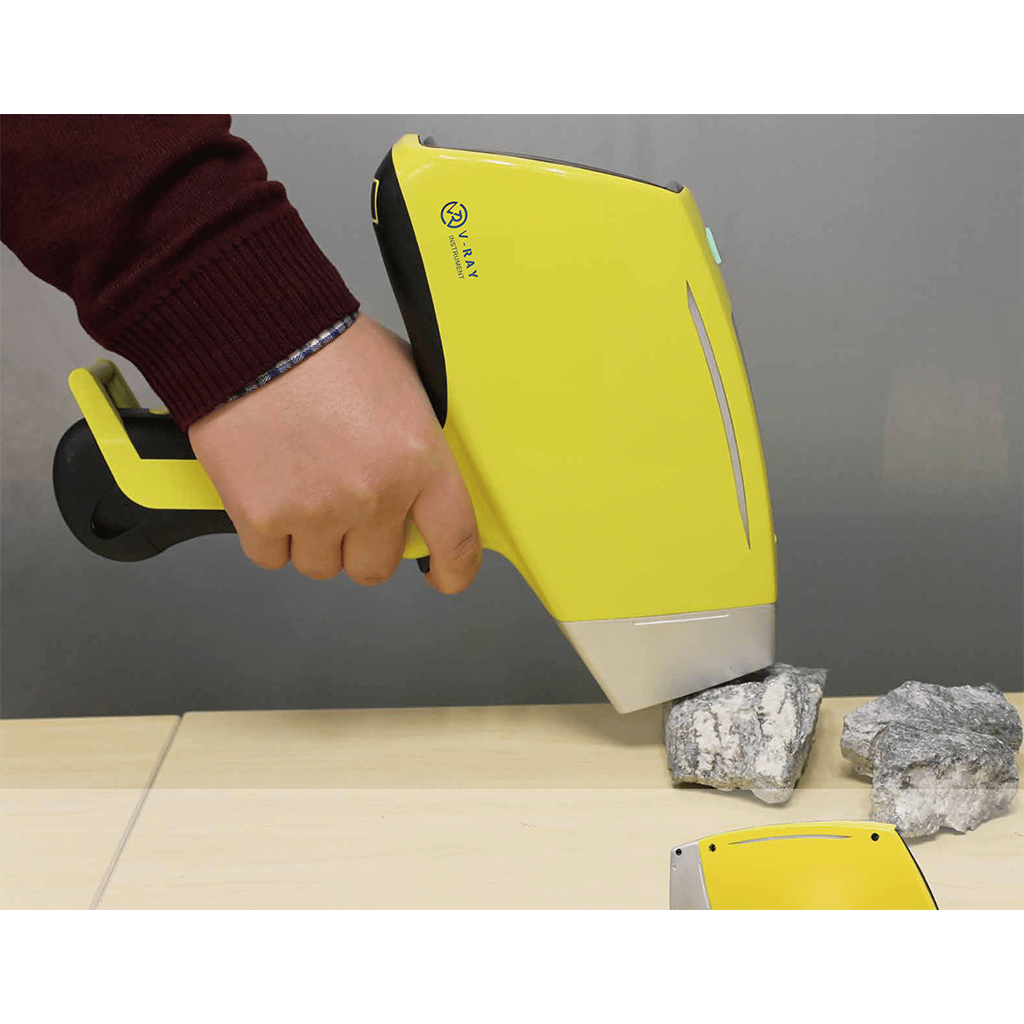
Modern precious metal analysis utilizes X-ray Fluorescence (XRF) technology to eliminate uncertainty. An XRF analyzer fires a primary X-ray beam into the jewelry, causing the electrons in the metal’s atoms to shift. As they return to their stable state, they emit secondary X-rays (fluorescence) unique to each element.
Advantages of XRF Analysis
Non-Destructive: No scratching or acid required; the specimen remains in pristine condition for resale.
Elemental Breakdown: Instantly differentiates between a gold base and a platinum base, regardless of surface plating.
Alloy Precision: Identifies the presence of nickel, palladium, silver, and copper, providing a complete 99.9% accurate metallurgical recipe.
Speed: A full analysis report is generated in under 10 seconds, facilitating rapid intake in pawn and refinery environments.
Professional Identification Checklist
When verifying white gold vs. platinum, professionals should follow a tiered protocol to ensure accuracy:
Hallmark Inspection: Look for “Pt950” or “PLAT” for platinum, and “14K” or “18K” for white gold. Be aware that stamps can be forged or worn.
Visual Wear Pattern: Look for a yellowish tint at high-friction points (like the bottom of the band). If yellow is visible, it is white gold with worn rhodium.
Weight-to-Volume Ratio: Use a precision scale. Platinum should feel “unusually heavy” for its size.
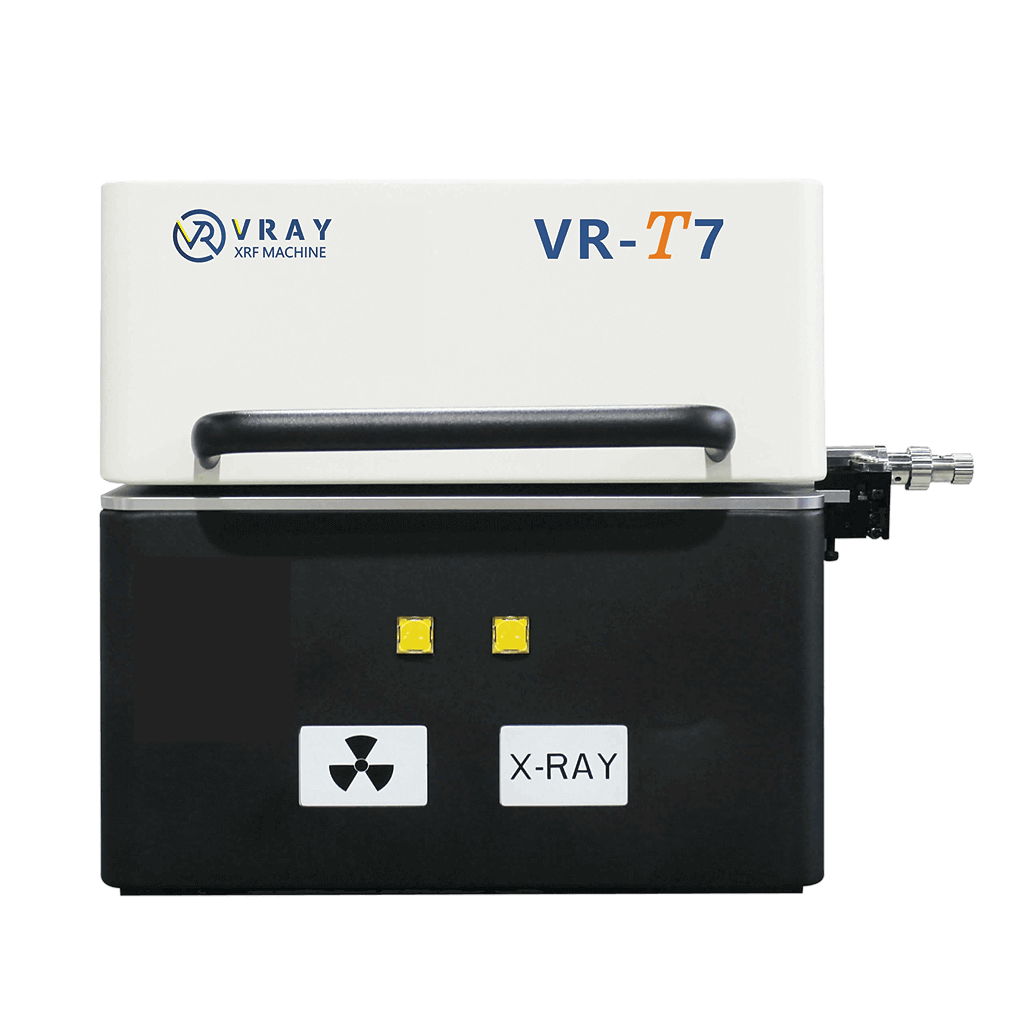
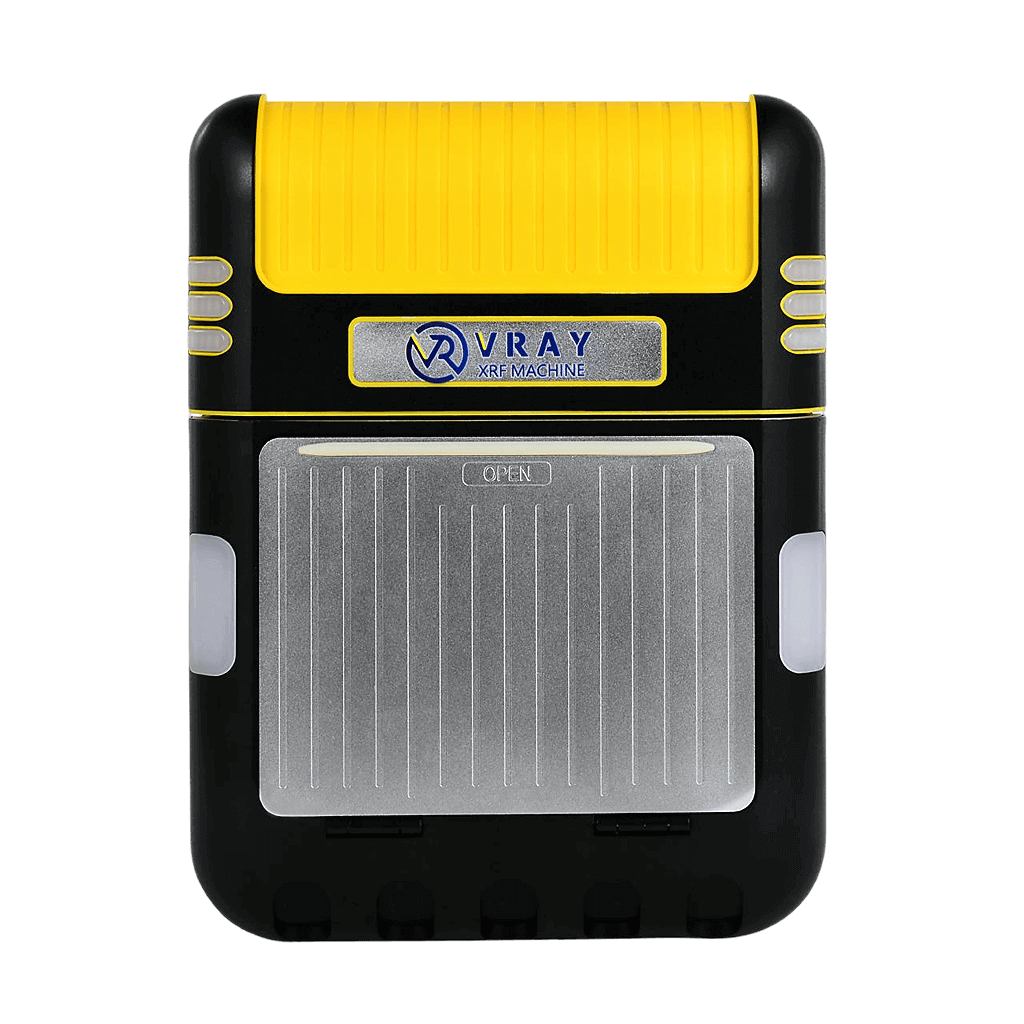
Atomic Confirmation: Use a handheld or benchtop XRF spectrometer to confirm the internal alloy.
Quality, Durability, and Maintenance
The choice between white gold and platinum often comes down to long-term cost of ownership. Platinum is more durable in terms of material retention—when it is scratched, the metal only moves, it doesn’t flake off. White gold is harder due to its alloyed metals, but every scratch removes a microscopic amount of the rhodium and gold. This makes white gold jewelry require a “dipping” (re-rhodium plating) every 12 to 24 months to maintain its appearance, whereas platinum merely needs a quick buffing.
Maximize Your Accuracy: Don’t leave your metal identification to guesswork. Explore VRAY’s range of advanced metal verifiers and ensure absolute precision in your jewelry business today.
Frequently Asked Questions
How can I tell white gold from platinum at home?
Weight is the best clue. If you have two similar-sized rings, the platinum one will be noticeably heavier. You can also look for the hallmark stamp inside the band (e.g., “Pt950” vs “14K”). However, without an elemental analysis, you cannot be 100% certain.
Why is white gold cheaper than platinum if gold is more expensive per ounce?
While the market price of gold and platinum fluctuates, platinum jewelry is usually more expensive because it is denser (meaning more metal is required for the same ring) and it is typically 95% pure, whereas 14K white gold is only 58.3% gold.
Does rhodium plating affect an XRF reading?
Modern XRF analyzers can “see through” thin plating. The device detects both the surface rhodium and the underlying gold or platinum base, providing a multi-layer report that identifies the core metal accurately.
Is white gold or platinum better for someone with allergies?
Platinum is the clear winner for safety. It is naturally hypoallergenic. White gold, especially cheaper 10K or 14K alloys, often contains nickel, which is a common skin irritant once the rhodium plating wears thin.