













In the jewelry industry, precision is the cornerstone of trust. For decades, the “Density Test”—rooted in Archimedes’ Principle—has been the go-to method for verifying gold purity. By measuring an object’s weight in air and its displacement in water, one can theoretically calculate its specific gravity. However, in the modern landscape of complex jewelry design and sophisticated counterfeiting, this classical method is increasingly failing. From air pockets in hollow designs to the integration of mixed materials and heavy-metal cores, the limitations of density testing have never been more apparent.
Key Takeaways
The Physics Gap: Density tests assume an object is solid and homogeneous; air pockets in hollow jewelry create “buoyancy errors” that lead to false purity readings.
Composite Complexity: Gemstone settings involve multiple materials with vastly different densities, making average specific gravity calculations mathematically useless.
Tungsten Counterfeits: Since tungsten’s density (19.25 g/cm³) is nearly identical to 24K gold (19.3 g/cm³), density-based tools cannot distinguish between them.
Technological Shift: X-ray Fluorescence (XRF) analysis has replaced density testing as the industrial standard, offering non-destructive, elemental breakdowns.
Value Protection: Relying on outdated testing puts businesses at risk of significant financial loss and reputational damage.
The Structural Deficiencies of Density Testing
Air Pockets and Hollow Construction
Modern manufacturing often favors “Hollow” or “Electoformed” jewelry. These pieces offer the visual impact of solid gold while remaining lightweight and affordable. However, these hollow spaces are the primary reason Archimedes’ method falls short. When submerged, the air trapped inside the piece significantly reduces its overall mass relative to its volume. This results in a calculated specific gravity that is much lower than the actual alloy used.
For instance, a genuine 18K hollow bangle might have a calculated density suggesting it is only 10K or even a base metal. Conversely, if water enters the hollow chamber through a microscopic pinhole during the test, the weight displacement changes unpredictably, rendering the result invalid. Solder joints, which often utilize different alloys to facilitate bonding, further skew the volume calculations of hollow links and chains.
Mixed Materials in Gemstone Pieces
The integration of gemstones introduces a mathematical nightmare for density-based testers. Gold has a high specific gravity (approx. 19.3 for 24K), while most common gemstones like diamonds (3.52), sapphires (4.01), or emeralds (2.76) are significantly lighter. When an appraiser tests a set piece, the machine measures the *average* density of the entire assembly.
Because the ratio of gold to stone varies between every piece, there is no standardized formula to “subtract” the stone’s influence accurately. This ambiguity allows for fraud; a counterfeiter could use a slightly denser base metal and offset it with a specific gemstone weight to mimic the average density of a 14K gold ring. Without removing the stones—a process that is often risky and time-consuming—density testing provides nothing more than an educated guess.
Plating and Advanced Coatings
Surface treatments like heavy gold electroplating (vermeil) or PVD coatings are designed to be indistinguishable from solid gold to the naked eye. While a density test is more reliable than a simple visual check, it still struggles with high-quality plating on dense base metals. If a copper or brass core is expertly plated with a thick layer of 24K gold, the slight difference in density might be dismissed as “alloy variation” by an inexperienced tester.
The Science of Gold Verification
The Tungsten Threat in Fake Gold
The most dangerous threat to the gold market today is tungsten. As shown in the table below, the physical properties of tungsten make it the “perfect” material for deceptive practices. Its density is so close to gold that most specific gravity scales cannot detect the difference within an acceptable margin of error.
Element | Density (g/cm³) | Melting Point (°C) |
|---|---|---|
24K Gold | 19.30 | 1,064 |
Tungsteno | 19.25 | 3,422 |
Lead (Common Fake) | 11.34 | 327 |
Copper (Base) | 8.96 | 1,085 |
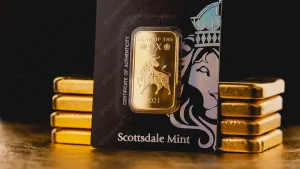
A “tungsten-filled” gold bar or coin will pass a density test with flying colors. Counterfeiters often use a tungsten core and wrap it in a thick layer of genuine gold. In high-stakes markets, such as the artisanal gold sectors in Africa or the DRC, where doctoring gold is common, relying on a water bucket and a scale is a recipe for disaster. This is why professionals have pivoted toward advanced gold analysis techniques.
Modern Solutions: The XRF Advantage

XRF Technology for Accurate Results
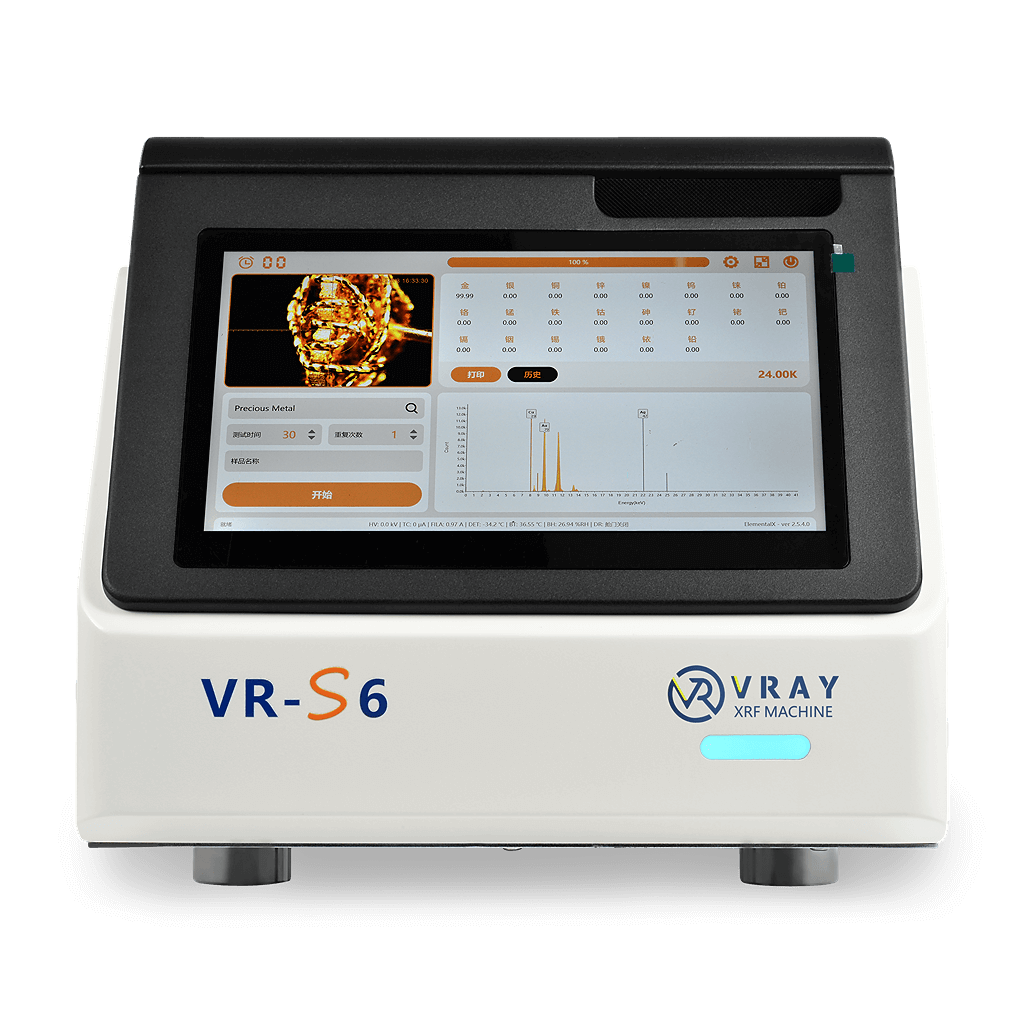
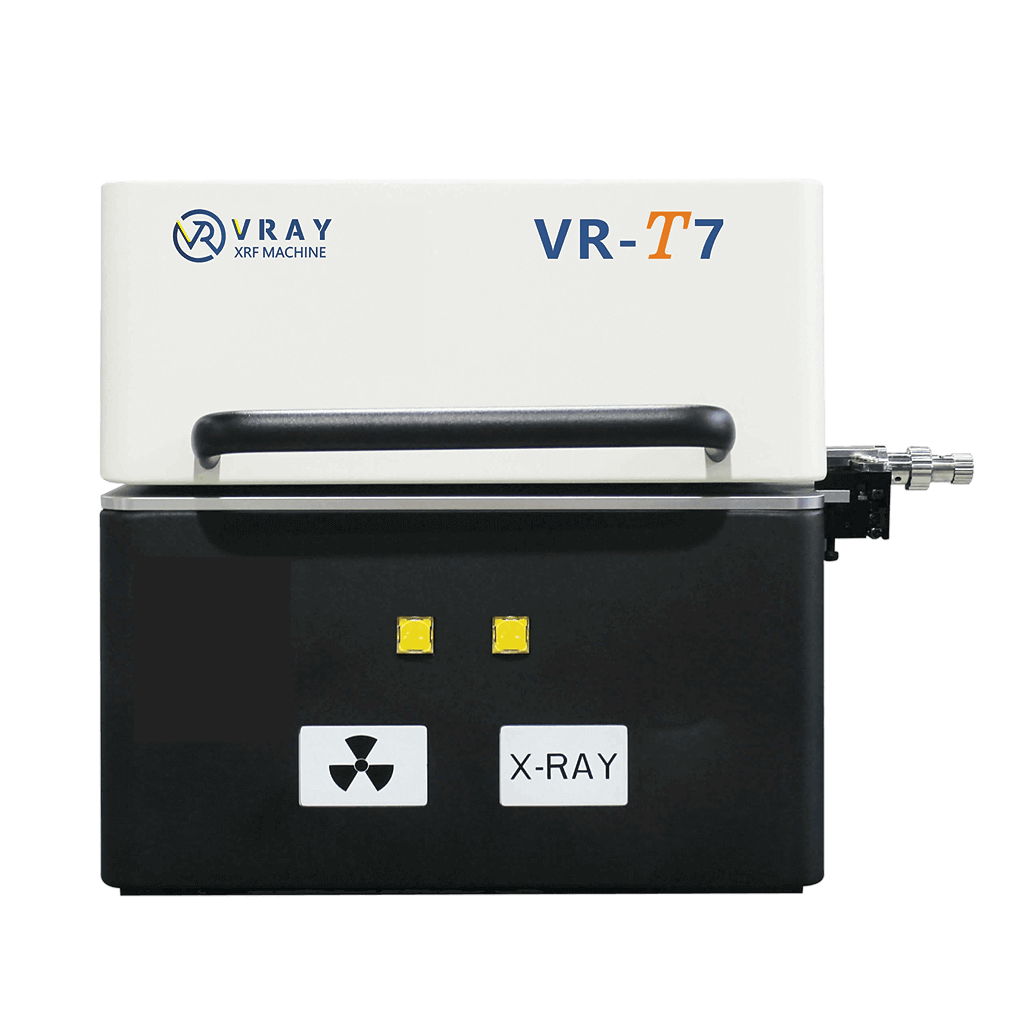
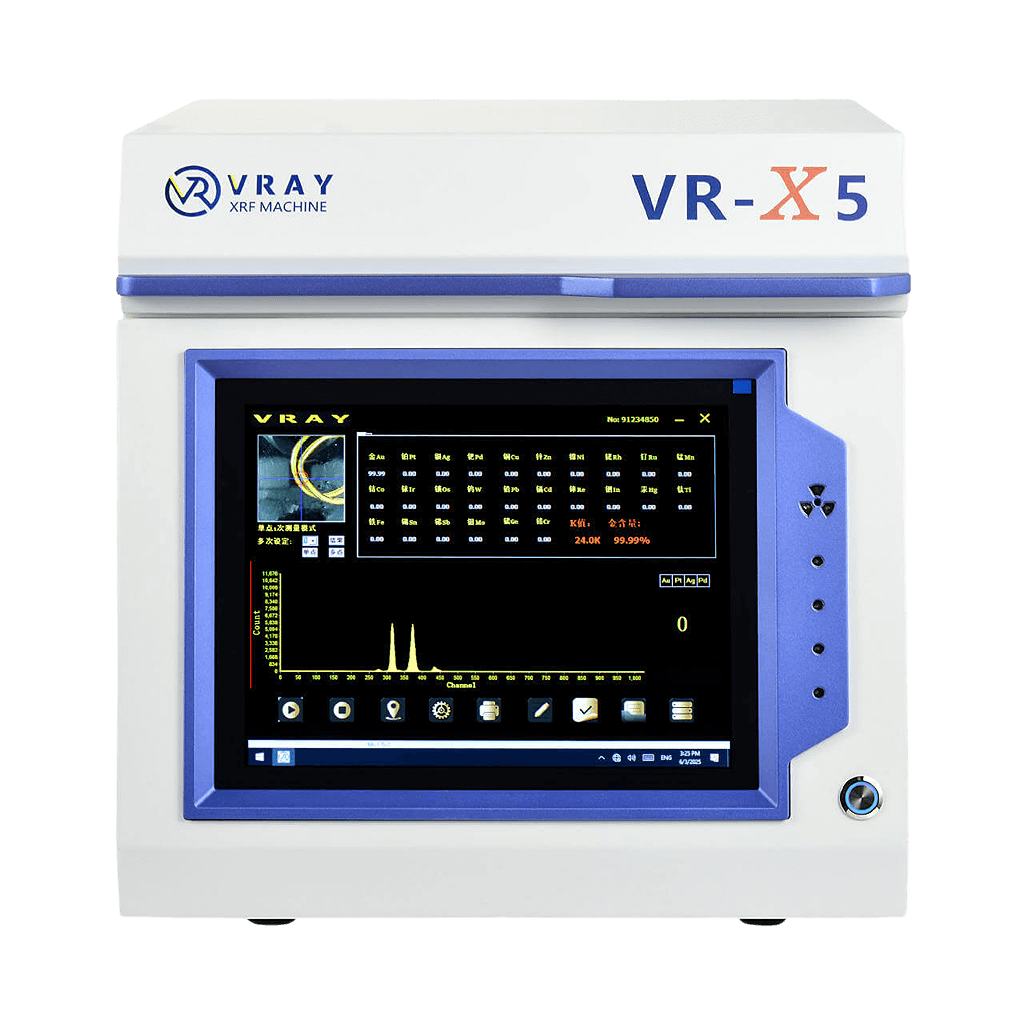
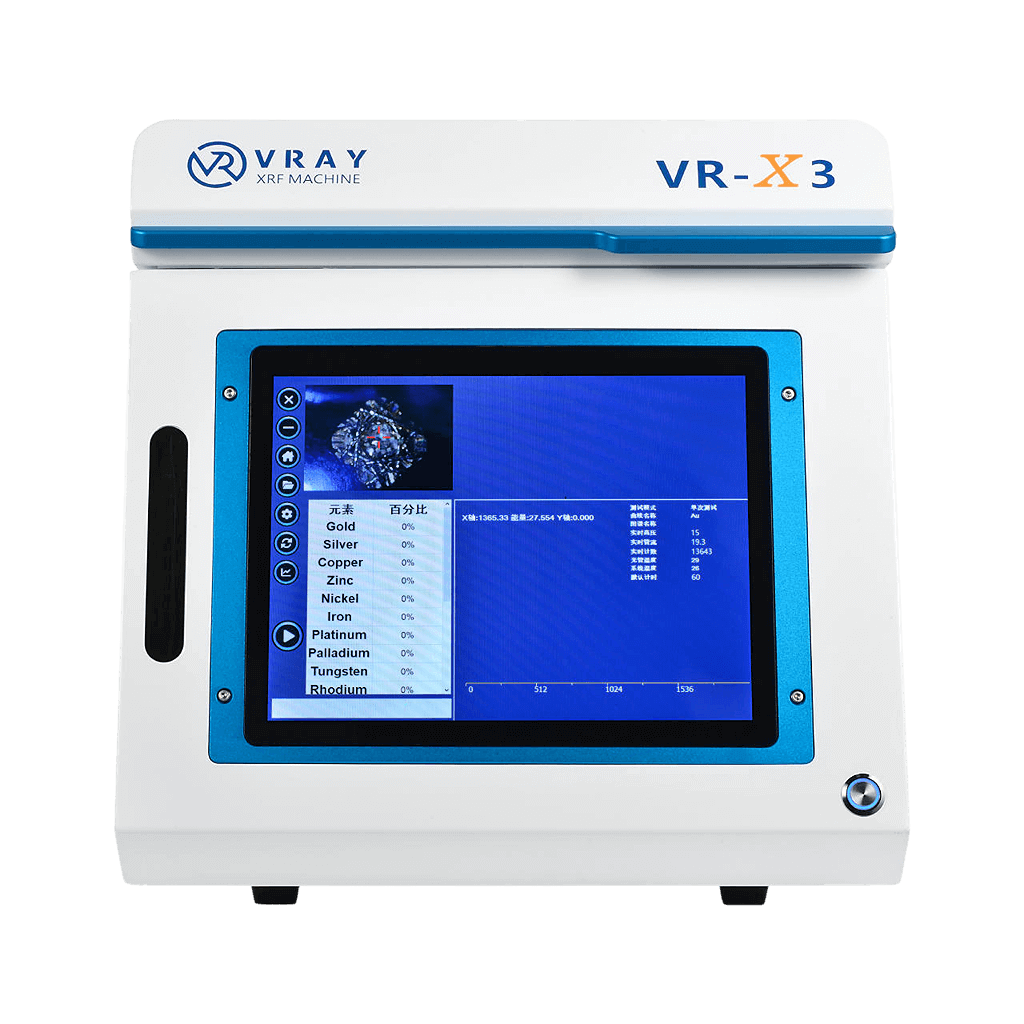
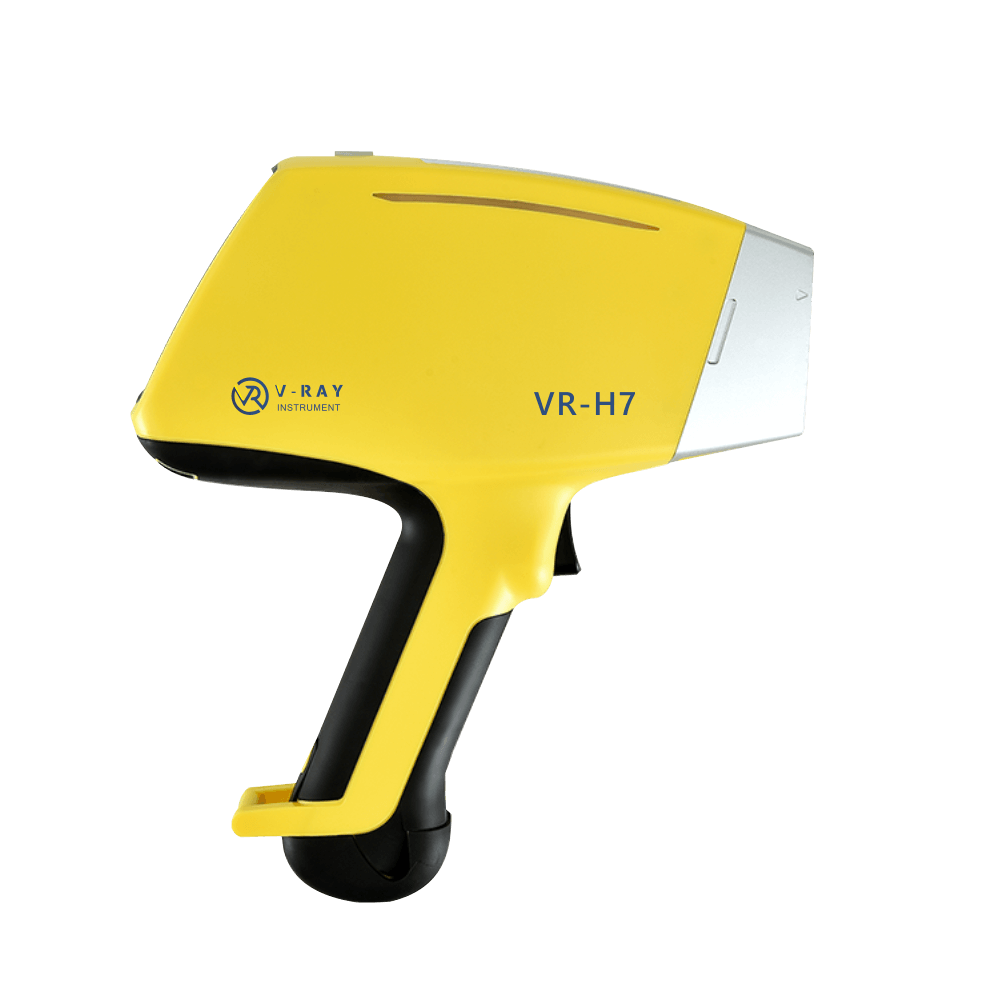
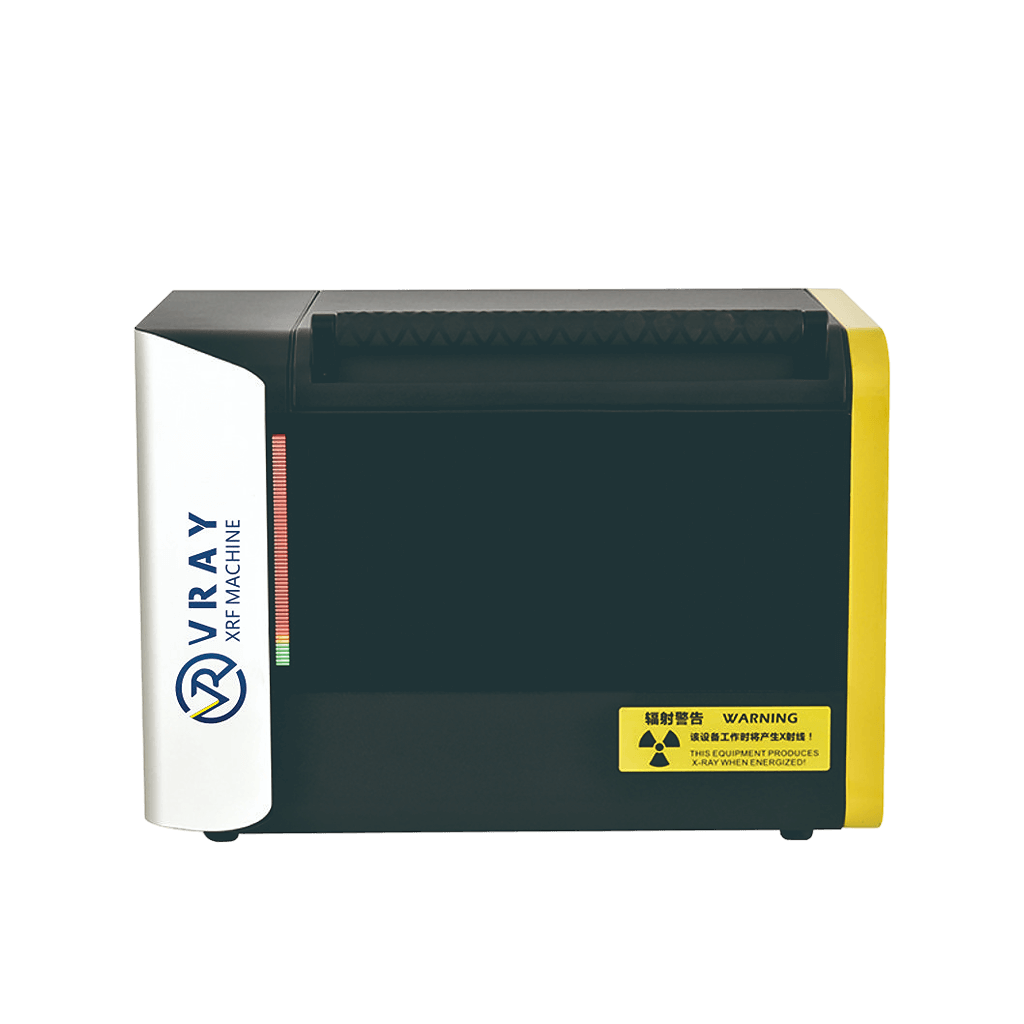
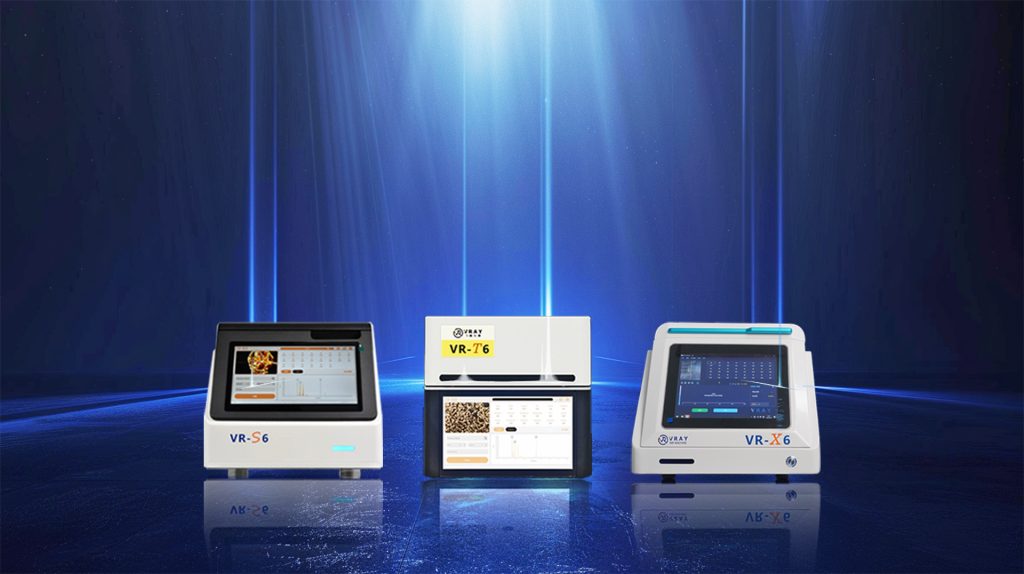
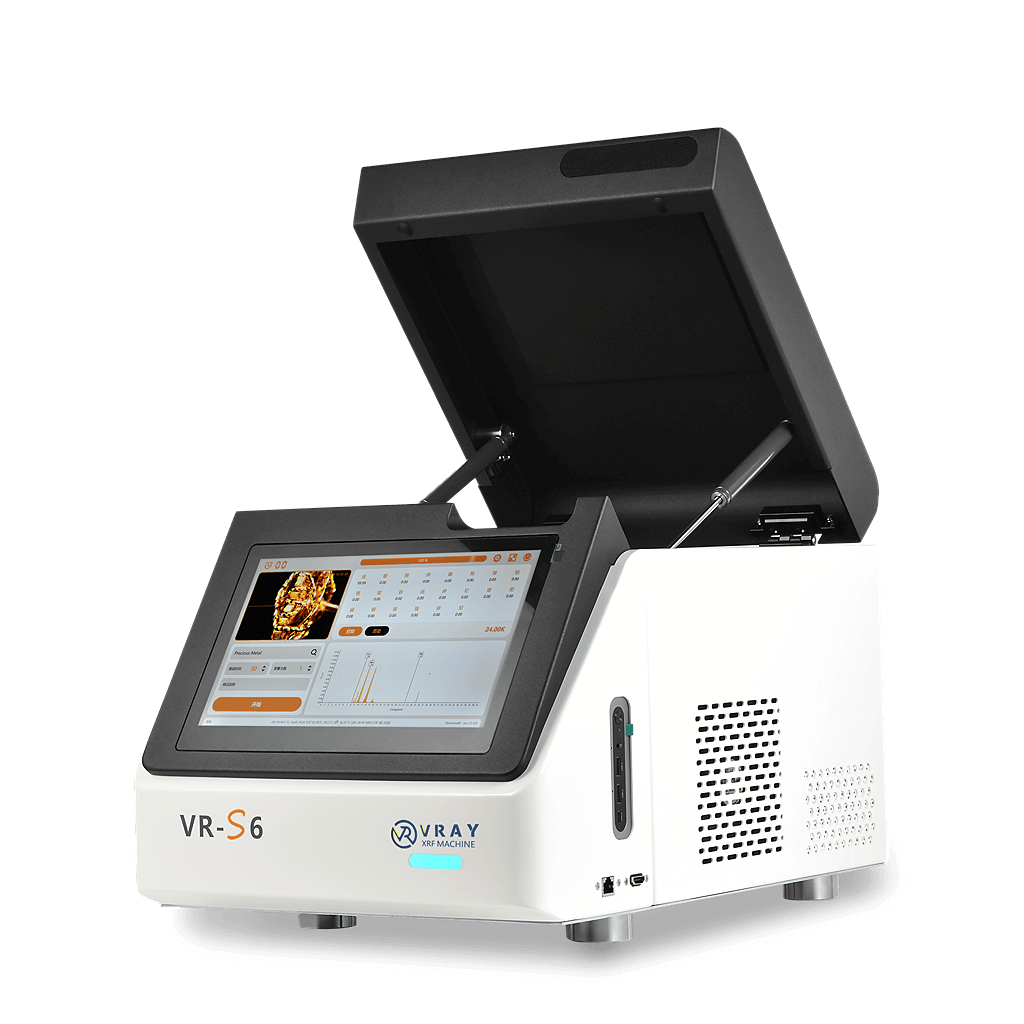
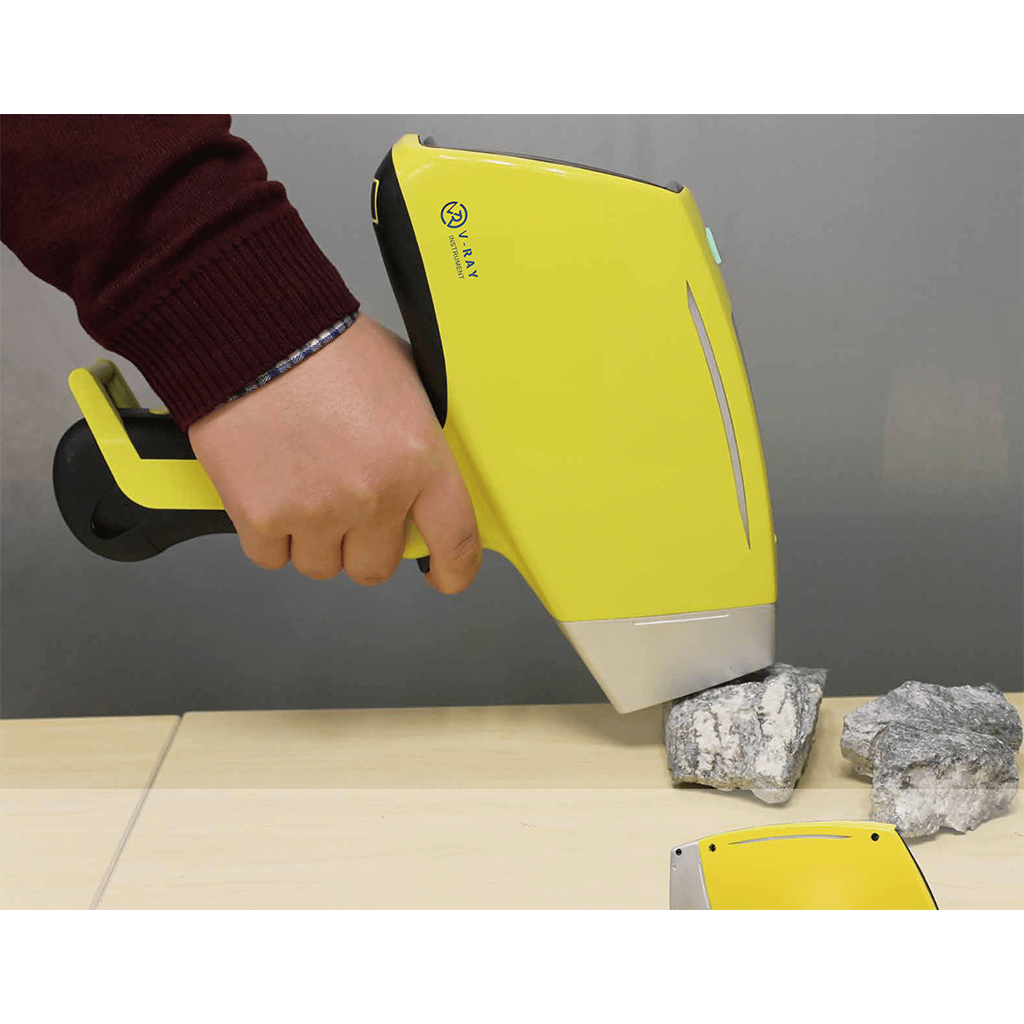
X-ray Fluorescence (XRF) technology provides an elemental “DNA” of the jewelry. Instead of measuring mass and volume, an XRF gold analyzer fires a high-energy X-ray beam at the sample. The atoms in the metal become excited and emit secondary X-rays that are characteristic of each specific element (Gold, Silver, Copper, Zinc, Tungsten, etc.).
This method is unaffected by air pockets or hollow constructions because it analyzes the atomic structure of the material. For gemstone-set pieces, XRF can target specific points on the metal setting, ignoring the stones entirely. It provides a percentage-based breakdown of every metal present in the alloy, ensuring that a 14K piece actually contains 58.3% gold.
Feature | Density/Archimedes Test | XRF Analysis |
|---|---|---|
Exactitud | Low (Affected by design) | High (Up to 0.01% precision) |
Hollow Jewelry | Fails (Buoyancy issues) | Excellent (Targeted analysis) |
Gemstone Pieces | Inaccurate (Mixed density) | Excellent (Small spot focus) |
Tungsten Detection | Fails (Density is too similar) | Excellent (Atomic identification) |
Speed | Slow (Requires water/drying) | Instant (Seconds) |
Non-Destructive Testing Methods
The greatest benefit of modern XRF is that it is completely non-destructive. Antique jewelry, heirloom pieces, and delicate gemstone settings remain unharmed. This is critical for maintaining the resale value and structural integrity of the item. As the global market for gold purity testing machines expands—projected to reach over $2.1 billion by 2032—the industry is moving toward a standard where transparency is guaranteed by technology, not just by “feel” or “weight.”
Risks of Relying on Density Tests
The financial risks of using outdated testing methods are massive. A single misidentified gold bar or a fake gemstone-set necklace can cost a business thousands of dollars. Furthermore, the psychological impact on the consumer cannot be overstated. When a customer buys what they believe is real gold, only to find out it was a clever tungsten fake that passed a basic density test, their trust in the brand is permanently shattered.
“In the modern era, the specific gravity test should be viewed as a preliminary screening tool, not a final verdict. For definitive authentication, elemental analysis is the only path forward.”
Professional Best Practices for Valuation
For pawnbrokers, gold buyers, and jewelry manufacturers, a multi-layered approach to testing is recommended:
Visual and Hallmark Inspection: Check for proper stamps and signs of wear at friction points.
Magnet Test: Use a neodymium magnet to quickly rule out ferromagnetic base metals like iron or nickel.
XRF Elemental Analysis: Use a professional gold tester to confirm the exact karatage and detect prohibited elements or core fillers.
Ultrasonic Testing: For large gold bars, ultrasonic pulses can detect hidden cavities or tungsten inserts deep within the center where X-rays may not reach.
By integrating these technologies, jewelers can avoid common scams and ensure that every transaction is backed by scientific proof. The era of “guessing” at gold purity is over; precision instruments have leveled the playing field against counterfeiters.
FAQ
Why do density tests fail on hollow jewelry?
Density tests rely on an object’s displacement of water. Hollow jewelry contains air pockets that make the piece more buoyant, artificially lowering its calculated density and making high-purity gold appear fake or low-karat.
Can a density meter distinguish between gold and tungsten?
Generally, no. Tungsten and gold have specific gravities that are nearly identical (19.25 vs 19.30). Most standard jewelry scales and density meters do not have the sensitivity required to distinguish between the two reliably.
Is XRF testing safe for all types of jewelry?
Yes, XRF is a non-destructive method that uses low-level X-ray radiation to analyze the surface and near-surface layers of the metal. It does not harm gemstones, organic materials like pearls, or the gold alloy itself.
How does XRF handle jewelry with multiple stones?
Professional XRF analyzers allow for “small spot” analysis. The operator can focus the X-ray beam on a specific metal area (like a prong or the band), ensuring the reading is purely from the gold alloy and not influenced by the density of the stones.
Discover the future of gold testing and protect your investments with high-precision XRF technology solutions today.